In this guide
Key takeaways
- YouTube may turn off monetization on a channel that has not uploaded a video or posted to the Posts tab for 6 months or more (YouTube Help, checked 3 November 2026).
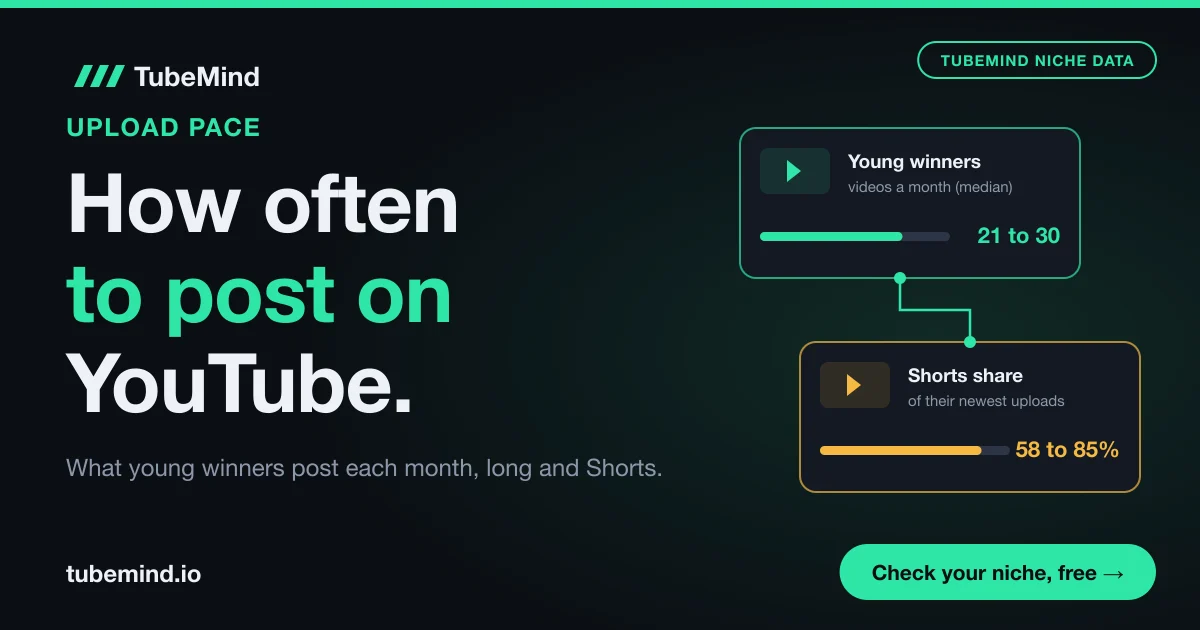
- On 3 November 2026, small channels breaking out in four niches tracked by TubeMind posted a median of 20.9 to 30 videos a month, and most of those uploads were Shorts.
- Shorts made up 58% to 85% of the newest 3,000 videos TubeMind sampled in each of those four niches.
- Metricool's 2026 study of 799,718 videos found that 2 to 4 long videos a week gave the best views per video, and that above 7 a week, total monthly views went down.
- YouTube's own Help page treats upload frequency as a question of what you can sustain over the long term. It does not describe it as a ranking rule.
"How often should I post?" is the question I hear most from people starting a channel, usually right after "which niche should I pick?". It sounds like it should have one number for an answer. It does not, but it does have a clear way to find your number, and that is what this guide gives you.
I have been making YouTube videos since 2018 and blogging since 2010, and the pattern I have seen again and again is simple: channels rarely fail because they posted once a week instead of three times. They fail because the creator burned out trying to keep a pace that was never realistic, or because they posted a lot of videos that few people wanted to click. So in this guide I will cover the pace for long videos and for Shorts separately, show what small winning channels are posting right now in TubeMind's index, and give you a 4-week test to find a schedule you can keep. If you also want to know which day and hour to publish, that is a separate question, and our free best time to post heatmap answers it for your niche.
How often to post on YouTube: a starting pace for every type of channel
The right pace depends on what you make and how long each video takes you. Here is where I would start in each common situation. Treat these as starting points for a test, not rules.
| Your situation | Long videos | Shorts | Why this pace |
|---|---|---|---|
| Brand new, part time, filming and editing alone | 1 a week | 2 to 3 a week, cut from the long video | You learn faster from finished videos than from one perfect one, and this pace survives a busy month. |
| Long-form only (tutorials, documentaries, reviews) | 1 a week, or 2 a month for heavy research | Optional | Research and editing take most of your time. Quality per video matters more than count. |
| Shorts-first channel | 0 to 1 a month | 1 a day, or 5 a week | Shorts are quick to make and each one is a fresh test of an idea. |
| Mixed channel with some experience | 1 to 2 a week | 3 to 5 a week | Shorts bring new viewers; long videos earn watch hours and better pay. |
| News, gaming or commentary | 3 or more a week | Daily | Viewers come back for what is new today, so speed matters more than in evergreen topics. |
| Small team or full-time creator | 2 to 4 a week | Daily | Only if each video still gets a strong idea, title and thumbnail. |
Here is how to read the table. Find the row that sounds most like you, then look across. Say you are a student who wants to make history videos on weekends. You are in the first row: one long video every week, plus two or three Shorts made from the best moments of that video. It is a small enough load that you can still keep it during exams.
A gaming channel that plays every day fits the fifth row instead, because its viewers want this week's game, and a late video loses most of its value. Different topics need different paces, and that is the main idea of this guide.
Does posting more often help the YouTube algorithm?
Not directly. YouTube recommends individual videos to viewers it thinks will watch and enjoy them, so a channel does not get a bonus just for uploading more.
YouTube's official upload schedule tips page talks about frequency in practical terms. It asks you to check how many videos you post per week or month and whether that pace is sustainable over the long term, and it suggests planning ahead and using scheduling tools. Nowhere does it say that more uploads earn more recommendations. In a 2024 interview, Todd Beaupré, who leads YouTube's growth and discovery team, also said the system does not hold a break or a run of low views against a channel's next video.
So why do so many studies find that channels which post more often grow faster? Because each upload is a new chance. Think of every video as a ticket in a draw. If one in ten of your videos takes off, posting four videos a month gives you about one hit every two and a half months. Posting eight gives you almost one hit a month. Nothing about the algorithm changed; you just bought more tickets.
That only works if the extra videos are as good as the old ones. If doubling your pace makes every video weaker, your hit rate drops and you work twice as hard for the same result. This is why every good answer to "how often" comes back to how much good work you can produce.
How often to post long videos
For long videos, once a week is the best starting point for most creators, and two a week is a good target once your process is smooth.
The main limit on long videos is production time. A 10 to 15 minute video with research, a script, filming, editing, a title and a thumbnail often takes a solo creator a full day of work or more. If you have a job or classes, that is a big part of your free time each week. Promising three of those a week usually ends with a missed week, then two, then a quiet channel.
What does the bigger data say? Metricool, a social media analytics company, studied 799,718 videos from 71,177 accounts and published the results on 29 July 2026. For long videos, it found that channels posting 2 to 4 times a week got the best average views per video (about 10,552 views per post). Going up to 4 to 7 posts a week added only about 6% more views for a lot more work, and above 7 posts a week, total monthly views went down. Channels posting less than once a week did worst over a month, because a single video had to carry the whole month.
In plain words, there is a sweet spot below "as many as possible". Say you post one long video a week and each gets 1,000 views. Moving to two a week adds four more videos a month, so about 4,000 more views a month if each new video does as well as the old ones. Moving to seven a week is likely to cost you more in quality than it gives you in views, unless you are a news or gaming channel where speed is part of the value.
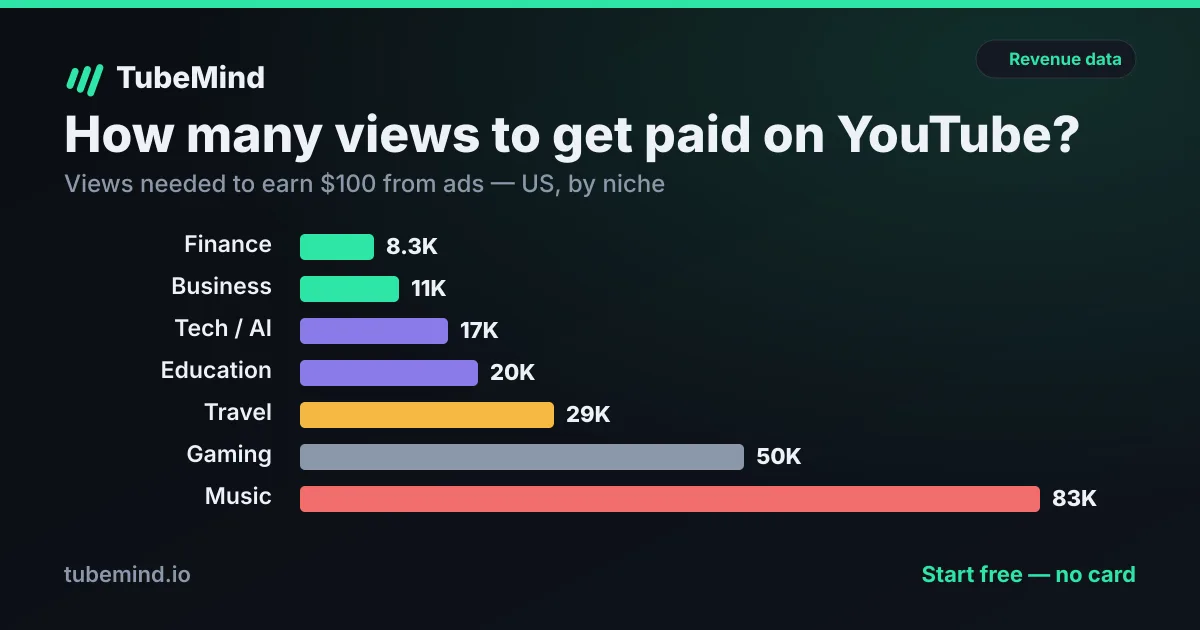
If you are heading toward monetization, long videos have one more job. The YouTube Partner Program counts 4,000 watch hours from public long videos in the last 12 months, with 1,000 subscribers (YouTube Partner Program eligibility, checked 3 November 2026). Shorts Feed views do not count toward those hours. Our guide on how many views you need to get paid works through the maths, and the watch time calculator shows how long your current pace would take to get there.
How often to post YouTube Shorts
For Shorts, 3 to 5 a week is a comfortable pace for a mixed channel, and one a day is reasonable for a Shorts-first channel, as long as each Short has a clear hook and a reason to watch to the end.
Shorts are far quicker to make than long videos, so a higher count is realistic, and each Short works like a fast test of an idea. That is why Shorts channels post much more often, as our data below shows.
Metricool's 2026 study found the same split. For Shorts, 2 to 4 a week gave the best views per Short, but posting more did not hit a ceiling on total monthly views, as long as quality held. It also found something useful for mixed channels: accounts posting around 5 Shorts a month got about 8,789 views per long video on average, against 4,364 for accounts with no Shorts at all. Accounts posting 35 or more Shorts a month fell back to about the no-Shorts level. Metricool says this is a correlation and not proof, but it fits what many creators see: a few Shorts help people discover your long videos, while a flood of Shorts can pull your channel's audience toward Shorts only.
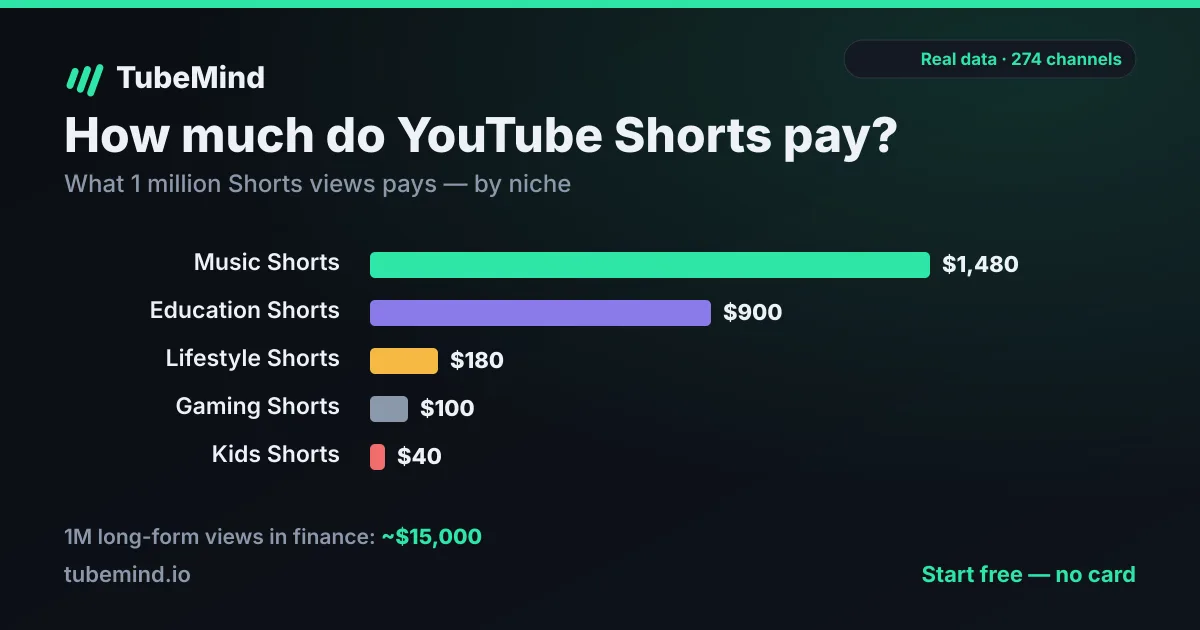
Before you go all in on Shorts, know what they pay. Shorts usually earn much less per 1,000 views than long videos, which our breakdown of how much YouTube pays for Shorts explains with figures from our index. The Shorts route into the Partner Program needs 10 million Shorts views in 90 days plus 1,000 subscribers, which is a lot of uploads for most channels.
A practical system I like for mixed channels: make one long video, then cut two or three Shorts from it. Each Short should stand on its own and point toward the full video. That gives you a steady Shorts pace without making extra content from scratch.
How many Shorts a day is too many? YouTube does not publish a best number, so your limit is your ideas. I would rather post one strong Short a day than five rushed ones.
What our data shows: how often young winning channels post
Small channels that are breaking out right now post much more often than the usual "once a week" advice, but most of that volume is Shorts.
To check this, on 3 November 2026 I pulled the niche reports for four niches from TubeMind's index. Each report lists young winners: channels under 10,000 subscribers that posted a video with at least 5 times their own usual views in the last 30 days (the same idea as an outlier video). The report then gives the median upload pace of the young winners it shows (up to 9 channels per niche). Here is what came back.
| Niche | TubeMind verdict | Young winners | Their median uploads a month | Shorts in the newest 3,000 videos | Median weeks to a first 10,000-view video |
|---|---|---|---|---|---|
| Geography & Maps | Enter now | 28 | 20.9 | 85% | 1 |
| History Documentary | Enter now | 24 | 21.8 | 61% | 2 |
| Finance Explained | Wait | 7 | 28.3 | 58% | 3 |
| Cooking & Recipes | Enter now | 49 | 30 or more | 82% | 1 |
TubeMind niche reports, 3 November 2026. Upload pace is the median of the young winners shown in each report; TubeMind leaves out channels posting more than 45 times a month (likely bots or reupload channels) and caps the figure at 30. Weeks to a first 10,000-view video is based on 6 to 9 young winners per niche, so treat it as an example.
Their median uploads a month is about 21 to 30 across these niches. That sounds like a lot, and it is: roughly 5 to 7 videos a week. But look at the next column. In Geography & Maps, 85% of the newest videos in the niche were Shorts. The three winners shown in that report had Shorts making up 70% to 100% of their uploads. So "21 a month" mostly means "a Short almost every day", not 21 long documentaries.
History Documentary is the one niche here where long videos still make up a big share (61% Shorts means 39% long videos). Two of its young winners posted no Shorts at all and still uploaded about 27 to 29 long videos a month. I would not copy that pace blindly. I do not know how those videos are produced, and that is far above what a solo creator who researches, records and edits each video can keep up.
Finance Explained has a high pace, 28.3 a month, but only 7 young winners and a Wait verdict. Pace cannot fix a crowded topic. If you are still choosing a topic, our guide to finding a YouTube niche shows how to check a niche before you commit to any schedule.
The last column is the most encouraging. In three of the four niches, the typical young winner got its first video past 10,000 views within 1 to 2 weeks of its first upload. Early momentum is possible, and it comes from many quick tests.
How should you use this? For a Shorts channel in an open niche, one Short a day matches what small winners do right now. If you make long videos alone, compare yourself with your own last month instead of their 21 uploads. You can see these numbers for any niche in the niche checker, and the method behind every score is on how our scores work.
Consistency or quality: which one matters more?
Quality matters more for each video, and consistency is how you protect it. The two are not rivals.
Quality decides whether a video gets clicked and watched, which is what YouTube's recommendations respond to. A great video posted on a random Thursday still gets shown to people. A weak video posted at your usual time still gets skipped. If you have to choose one thing to improve this month, choose the video.
Consistency does three useful things. First, it builds a habit: if people know a new video comes every Sunday, some come looking for it. Second, it makes your analytics easier to read. When you post on a steady pace, a sudden jump or drop in views points to the video itself rather than a two-week gap before it. Third, it protects you, because a planned schedule is one you can stick to for years.
Picture two creators. A posts three videos one week, nothing for a month, then two in a rush. B posts one good video every Saturday. After three months, B has a clear picture of what works. A has spikes, gaps and no idea which video helped.
The rule I would follow: choose the highest pace at which you can still give every video a strong idea, title and thumbnail, then keep that pace. If you ever have to choose between posting a weak video on time or a good video two days late, post the good video late.
What happens if you stop posting or take a break?
A short break usually costs you some momentum but not your channel. A break of 6 months or more can cost you monetization.
Here is the official part. YouTube's Partner Program page says YouTube may turn off monetization on channels that have not uploaded a video or posted to the Posts tab for 6 months or more (checked 3 November 2026). So if you are monetized and need a long break, post something at least every few months. A post on the Posts tab counts too.
For shorter breaks, YouTube has said its system tries not to judge your next video by old data that does not predict how it will do. What changes is your audience: some viewers find other channels while you are away. That is why a first video after a break often starts slower, and why it usually recovers once you are back to a steady pace.
The best way to take a break is to plan it. Make two or three extra videos before you go and schedule them in YouTube Studio. YouTube's guide to scheduling a video's publish time shows how: you set the date, time and time zone on the upload screen, and the video goes live on its own. Tell viewers when you will be back, and come back on that day.
Find your own pace with a 4-week test
The fastest way to find your right frequency is to test one pace for four weeks and read your own numbers.
- Time one full video. Track the hours from idea to publish for your next long video and your next Short. This is your real cost per video, and most people guess it far too low.
- Pick a pace that uses 70% of your free time. If you have 10 hours a week and a long video takes 8, that is one long video a week. Leave the rest for ideas, mistakes and life. A pace that needs 100% of your time breaks in the first busy week.
- Fix your days, then schedule ahead. Choose your publishing days and try to keep one finished video in reserve. Use the best time to post tool to choose the hour, since that part is a different question from how often.
- Post for four weeks without changing the pace. Four weeks gives you at least four long videos, or 12 to 20 Shorts, which is enough to see a pattern.
- Read the numbers, then adjust once. Use the signals in the next section. If everything holds, add one more video a week, or two or three more Shorts, and test again for four weeks.
- Compare yourself with channels like yours. The channel comparison tool shows the upload rhythm of up to four channels side by side, and a quick channel audit scores your own upload activity with your other basics.
Here is a worked example. Say a creator in Lahore has 12 free hours a week. Her long cooking video takes 9 hours and a Short takes about 1 hour. Seventy percent of 12 is about 8.5 hours, so a weekly long video does not fit yet. She starts with one every 10 days plus two Shorts a week cut from it. Four weeks later her editing is faster (about 7 hours a video) and views per video held steady, so she moves to one a week. She grew her pace only after her process got faster, which is exactly the point.
How to tell if your pace is working
Your pace is working when total views grow and views per video stay level or rise. If total views grow while each video gets less, you are probably posting faster than your quality can keep up.
| Signal in YouTube Studio | Where to find it | Good sign | Warning sign |
|---|---|---|---|
| Views per video | Analytics, Content tab | Steady or rising as you post more | Falling with each pace increase |
| Click-through rate | Analytics, Reach | Holding at your normal level | Dropping because thumbnails feel rushed |
| Average view duration | Analytics, Engagement | Similar to your best month | Shorter as editing gets thinner |
| Returning viewers | Analytics, Audience | Growing over weeks | Flat even though you post more |
| Your energy | Your own diary | You still enjoy planning the next video | You dread upload day |
Let me explain why the first row matters most. Say you move from 4 videos a month to 8, and your monthly views go from 8,000 to 12,000. That looks like a win. But views per video fell from 2,000 to 1,500. You doubled the work for 50% more views, and each video is now weaker. That can still be worth it, especially early, but you should know you are making that trade.
Do not skip the last row. A pace that exhausts you will end, and when it ends, all the other numbers drop with it.
For creators in Pakistan and India
Many creators in Pakistan and India work part time and make Urdu or Hindi videos for a home audience. Shorts are tempting because they are quick and can collect a lot of views. But Shorts earn little per view, and a South Asian audience already earns less per view than a US one, so if income is your goal, keep at least one long video in every week or fortnight.
Exams, family events and Ramadan also eat your time. Build a reserve of videos before a busy month and schedule them ahead. A pace that fits your own calendar beats one copied from a US creator with a full-time editor.
Mistakes and limits of this advice
Most frequency mistakes come from copying someone else's number. These are the ones I see most:
- Copying a big creator's daily schedule. They usually have a team; you are probably working alone.
- Posting more to fix low views. If people are not clicking, more videos of the same kind give you more videos that people skip. Fix the topic, title and thumbnail first.
- Uploading in bursts. Five videos in two days, then silence for a month, makes your analytics impossible to read.
- Treating Shorts and long videos as one count. They are different products with different costs and different pay.
- Changing the pace every week. You need about four weeks at one pace before the numbers mean anything.
The limits of the data are worth knowing too. TubeMind's young winner figures come from four niches and up to 9 channels per niche on one day, so they show a pattern, not a law. The large studies from analytics companies show that faster posting and faster growth go together, but they cannot prove which causes which. And no study knows your production time or your audience. Your own four-week test is the most reliable data you will ever have about your channel.
YouTube Channel Comparison
Put your channel next to up to three channels in your niche and compare upload rhythm, median views of recent uploads, views per subscriber and breakout videos.
Compare upload rhythmHow this guide was researched
TubeMind data: niche reports for Geography & Maps, History Documentary, Finance Explained and Cooking & Recipes, pulled from TubeMind's public API on 3 November 2026, when the index held 21,452 channels and 1,785,460 videos fetched through the official YouTube Data API. Young winners are channels with 10,000 or fewer subscribers that posted a video with at least 5 times their median views in the last 30 days. Upload pace: median uploads per month of the young winners shown (up to 9), excluding channels above 45 a month, capped at 30. Shorts share is the share of Shorts among the newest 3,000 videos sampled per niche. Weeks to a first 10,000-view video: median gap from a young winner's first upload to its first video with 10,000 or more views (6 to 9 channels per niche). Method in how our scores work. External: YouTube Help, Upload schedule tips, YouTube Partner Program overview and eligibility and Schedule video publish time, all checked 3 November 2026. Metricool, YouTube Trends 2026 study (799,718 videos from 71,177 accounts, published 29 July 2026). Todd Beaupré's comments on breaks are from a YouTube interview with creator liaison Rene Ritchie, as reported by Search Engine Journal on 4 March 2024.
Want to see how often channels like yours post? Compare their upload rhythm for free.
Research right on YouTube: the free TubeMind Chrome extension shows the outlier multiplier, a revenue estimate and similar channels on YouTube pages.
Frequently asked questions
Is posting once a week on YouTube enough?
Yes, for most new long-form channels one good video a week is enough to grow. It gives you about 52 chances a year to find a video that takes off, and it leaves time to make each one well. Add Shorts cut from that video if you want more reach without much extra work.
Is it bad to post on YouTube every day?
Not by itself. YouTube does not punish daily uploads. It only becomes a problem when daily posting makes each video weaker, because fewer people click and watch. Daily works well for Shorts, news and gaming. For researched long videos, most solo creators cannot keep quality at that pace.
How many YouTube Shorts should I post a day?
One a day is a strong pace for a Shorts-first channel, and 3 to 5 a week is plenty for a channel that mainly makes long videos. YouTube does not publish an ideal number. Post more only while each Short still has a clear hook and a reason to watch to the end.
Does upload frequency affect the YouTube algorithm?
Not directly. YouTube recommends individual videos to viewers likely to enjoy them, and its Help page on upload schedules treats frequency as a question of what you can sustain. Posting more helps only because each video is another chance to be recommended.
Should I post Shorts and long videos on the same day?
You can, and it does no harm. Many creators publish a long video and then release its Shorts over the next few days, which spreads out new reasons for viewers to visit the channel. Keep the Shorts self-contained so they work for people who never saw the long video.
What happens if I stop uploading on YouTube for a few months?
Your videos stay up and can keep getting views, but new uploads often start slower when you return because some viewers have moved on. If you are monetized, YouTube may turn off monetization after 6 months or more with no uploads and no posts on the Posts tab.
Is it better to post 2 average videos or 1 great video a week?
One great video, in most cases. A great video can be recommended for months, while two average ones are often skipped. The exception is a news or trend topic, where being early matters. If you can make two videos a week without lowering quality, that is better still.
How often do small channels that are growing fast post?
On 3 November 2026, small breakout channels in four niches tracked by TubeMind posted a median of about 21 to 30 videos a month. Most of those uploads were Shorts, so the pace is closer to a Short a day than to daily long videos.
Can I upload several videos at once and schedule them?
Yes. In YouTube Studio you can upload a video, choose Schedule, and set the date, time and time zone it goes public. Making two or three videos ahead and scheduling them is the easiest way to keep a steady pace through busy weeks and breaks.
How long should I test a posting schedule before changing it?
About four weeks at one pace. That gives you at least four long videos or 12 to 20 Shorts, enough to compare views per video, click-through rate and average view duration. Changing pace every week leaves you with numbers you cannot read.